
Home » Assisted Living Activities for Seniors » Memory game for seniors
Memory games offer a simple and enjoyable way to keep the mind active in later life. They provide gentle mental stimulation without pressure and can be easily adapted to suit different ability levels. For many seniors, playing together also create moments of fun, focus, and meaningful interaction.
Playing memory games helps support cognitive health while encouraging social connection. Whether played alone, one-on-one, or in a group, these activities invite participation at a comfortable pace. Most importantly, playing is not about testing or performance. Mental stimulation activity is about engagement, enjoyment, and maintaining confidence through familiar and rewarding activities.
Memory games offer a structured and enjoyable way to keep the brain active, while creating social connections and positive experiences. When chosen thoughtfully, memory games can be both stimulating and reassuring.
Brain training matter for seniors because they:
Memory games help seniors stay engaged. They create opportunities for focus, connection, and enjoyment and support mental and emotional well-being.
Here are specific, senior-friendly memory game suggestions, chosen for accessibility, familiarity, and enjoyment. All can be played sitting down and adapted for different ability levels.
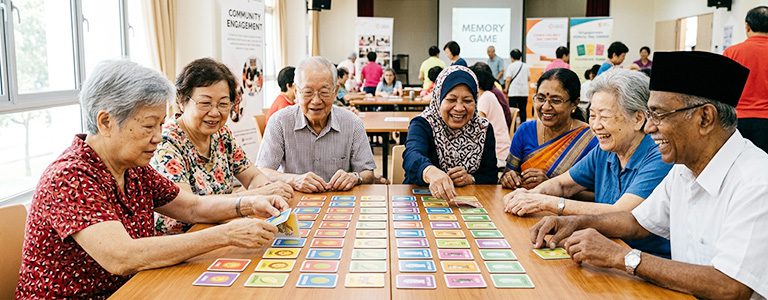
1. Matching Pairs (Memory Cards)
Cards are placed face down and turned over two at a time to find matching pairs. The number of cards can be adjusted to match ability levels.
2. Name That Tune
Play short clips of familiar songs and ask participants to name the song, artist, or era. Singing or humming along counts as participation.
3. Finish the Saying
Start a familiar proverb, phrase, or song lyric and invite participants to complete it together.
4. Picture Recognition Game
Show photos of everyday objects, places and ask participants to identify or talk about them.
5. Category Recall Game
Choose a category (e.g. fruits, animals, foods) and name items together, one at a time.
6. What’s Missing?
Place several objects on a table, let participants observe, then remove one item and ask what is missing.
7. Story Memory Game
Read a short story or paragraph, then ask simple questions about it or invite participants to share what they remember.
8. Object Matching
Match objects or cards by color, shape, or theme instead of exact pairs.
9. Memory Bingo
Use pictures, words, or sounds instead of numbers. Call out clues related to familiar topics.
10. Reminiscence Questions
Ask memory-based questions such as “What games did you play as a child?” or “What was your first job?”
For more ideas, also check out our article: 5 best memory games for seniors to keep the mind sharp
A successful memory game session focuses on comfort, encouragement, and enjoyment. The goal is to create a calm environment where seniors feel safe to participate without pressure or fear of making mistakes.
When planning a game session, keep these tips in mind:
Memory games should feel supportive and enjoyable, not like a test. When seniors feel relaxed and encouraged, memory game sessions become meaningful moments of connection and confidence-building.
Memory games are most effective when they are part of everyday routines rather than occasional activities. Short, regular game sessions help keep the mind active while creating familiar moments that seniors can look forward to. Even 10–20 minutes a day can make a positive difference.
To make memory games part of daily life, keep materials easily accessible and choose games that feel familiar. Games can be played after meals, during quiet afternoon hours, or as part of group activities. Mixing individual, one-on-one, and group-based games helps meet different needs and energy levels.
Memory games also work best when they are part of a varied and balanced activity program. They can be combined with physical movement, social interaction, music, or creative activities to support overall well-being. For more ideas on meaningful daily activities that support seniors’ cognitive, social, and emotional health, see our page: Assisted Living Activities.
When memory games become a natural part of everyday life, they support confidence, well-being, and meaningful interaction.