
Home » Assisted Living Activities for Seniors » Party games for seniors
Party games for Seniors are much more than simple entertainment. For the participants, they offer meaningful moments of connection, laughter, and shared experience. Playing together helps break daily routines and creates a sense of celebration, which can lift mood and bring positive energy into the event.
Social interaction is very important as we age. Party games encourage conversation, cooperation, and gentle participation, helping reduce feelings of loneliness and isolation. Even those who prefer not to play actively can enjoy watching, listening, and being part of the group. This sense of inclusion supports emotional well-being and boosts social wellbeing.
Party games also support mental and physical activity in a light and enjoyable way. Many games stimulate memory, attention, and hand-eye coordination without feeling too stressful. When games are adapted to suit different abilities and cognitive skills, everyone can join at their own level.
All the fun of the classic game—without standing.
Senior-friendly twist: Players sit in a circle and pass an object while music plays. When the music stops, the person holding the object answers a fun question or shares a memory.
Acting doesn’t have to be complicated.
Senior-friendly twist: Use picture cards or simple actions (animals, daily activities, hobbies). Gestures can be small and done while seated.
Classic trivia brings people together.
Senior-friendly twist: Use familiar topics such as old films, music, sayings, or historical events. Play in teams to reduce pressure.
A well-loved classic that works especially well for seniors.
Senior-friendly twist: Choose songs from participants’ youth and play short clips. Singing or humming along is encouraged. Play in teams to encourage discussion.
A lively group game that adds movement and laughter.
Senior-friendly twist: Use a balloon and play while seated in a circle to keep it safe and accessible.
A familiar game with simple instructions.
Senior-friendly twist: Focus on small, safe movements such as clapping, tapping the table, or nodding.
A sensory-based classic.
Senior-friendly twist: Use familiar household items placed in a bag. Players guess by touch or sight, encouraging memory and conversation.
Limited mobility should never limit opportunities for enjoyment and connection. With the right game choices, seniors can participate fully while remaining comfortably seated and safe. The best games focus on conversation, memory, light movement, and shared experiences rather than physical performance.
Bingo is a popular choice, as it requires minimal movement and can be easily adapted with large-print cards and clear visuals.
Trivia games and quizzes are also excellent options, encouraging conversation and mental stimulation without physical strain. These can be played in teams to support social interaction.
Word games, storytelling prompts, and reminiscence activities allow everyone to take part at their own pace, either by speaking or simply listening.
For those who enjoy gentle movement, seated games like passing a soft ball around a circle offer light physical activity without requiring standing or walking. These games support coordination and bring energy to the group while remaining safe and accessible.
Choosing the right party game is key to creating a positive and enjoyable experience for everyone. The most important starting point is knowing the participants. Consider their physical abilities, cognitive level, energy, and interests. A good game should feel inviting and achievable, not stressful or demanding.
Simplicity matters. Games with clear rules and a familiar structure are easier to understand and more enjoyable, especially for seniors with memory challenges. It is always helpful to choose games that can be played while seated and adapted on the spot by slowing the pace, simplifying rules, or allowing team play.
Inclusivity should guide every choice. The best party games allow multiple ways to participate—playing, answering questions, singing along, or simply watching and listening. This ensures that everyone feels included, regardless of ability level. When the focus is on shared enjoyment rather than competition, party games become a meaningful way to bring people together and create joyful moments.
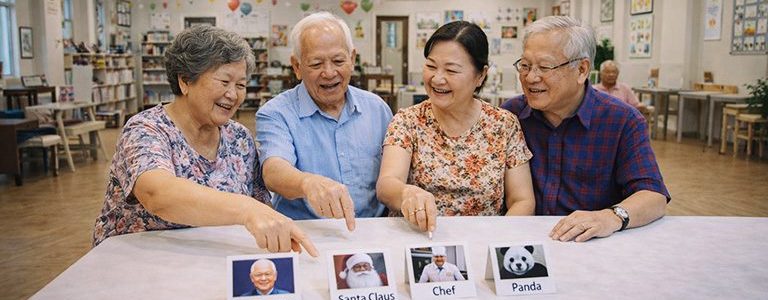
Some party games are reliable favorites because they are easy to understand, familiar, and enjoyable for almost everyone. These games require little preparation, can be played while seated, and create a relaxed atmosphere where participation feels natural rather than forced.
Who Am I?
Place a card with a well-known person, profession, or character on the table and give clues until someone guesses correctly. Team play keeps the game relaxed and inclusive.
Yes or No Quiz
Ask simple questions where participants answer only “yes” or “no,” either by raising a hand or answering aloud. This keeps participation easy and non-demanding.
Picture Guessing Game
Show old pictures of everyday items and ask what they are, where they might be from, or what memories they bring to mind.
Counting and Rhythm Games
Count together in a rhythm, clap hands,or tap the table. These games are simple, energizing, and accessible for nearly everyone.
Sound Guessing Game
Play everyday sounds (a bell, birds, rain, footsteps) and ask participants to guess what they hear. This activates sensory memory and works well even with limited mobility.
Guess the Smell
Use safe, familiar scents (coffee, cinnamon, lemon) and ask participants to identify them or share what they remind them of.
The year is shaped by cultural festivals and national celebrations. These moments offer rich opportunities for familiar, meaningful party games that spark memory, conversation, and joy.
Chinese New Year is deeply rooted in tradition and symbolism, making it ideal for reminiscence games.

CNY Trivia
Questions about zodiac animals, traditional greetings, or festive foods
Finish the Proverb
Complete common Chinese sayings related
to luck and prosperity
Red Packet Pass Game
Pass a (empty) ang bao while music plays; share
a wish when the music stops
Hari Raya celebrations focus on family, gratitude, and togetherness.
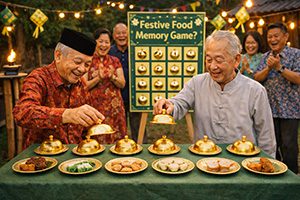
Festive Food Memory Game
Name traditional dishes and share memories linked to them
Greeting Practice Game
Practice festive greetings together, spoken or repeated aloud
Show and Tell
Share an item that reminds participants
of past Hari Raya celebrations
Deepavali offers rich visual and cultural elements that work well in group activities.
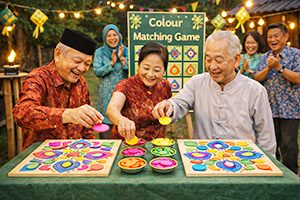
Colour Matching Game
Match bright colours inspired by rangoli designs
Festival Trivia
Light questions about traditions, symbols, and celebrations
Music & Rhythm Game
Gentle clapping or tapping to traditional music
This festival is closely linked to storytelling and shared traditions.
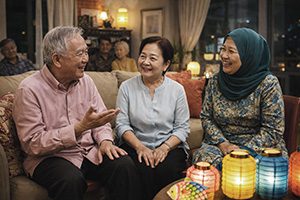
Mooncake Memory Game
Discuss flavours, shapes, and family traditions
Storytelling Circle
Share or listen to stories about lanterns or childhood celebrations
Poetry or Saying Completion
Finish simple festival-related phrases
Even for those who do not celebrate Christmas, year-end activities bring warmth and reflection.
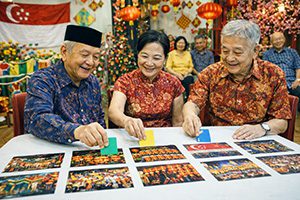
Guess the Song
Familiar Christmas
or year-end songs
Seasonal Question Circle
“What was special about
past year-end celebrations?”
Photo Voting Game
Choose favourite festive
decorations or scenes
Organizing party games for seniors does not require elaborate preparation. Simple games, familiar themes, and a calm atmosphere are often enough to create meaningful experiences. What matters most is a welcoming approach, patience, and genuine presence.
These small moments of shared play can have a lasting impact. They help reduce loneliness, support cognitive and emotional health, and remind seniors that celebration and joy are part of life at every age.
At Hovi Care, we provide creative activities and social programs for seniors.
Get in touch to discover how we can help.