
Home » Assisted Living Activities for Seniors » Simple card games for seniors
Card games are a familiar and enjoyable way for seniors to spend time together. They are easy to set up, can be played while seated, and offer gentle mental and social stimulation without physical strain. For many older adults, card games bring a sense of comfort through familiar rules and routines.
Card games offer several clear advantages for seniors:
Familiarity – Many card games are well known, reducing the need for long explanations.
With options like large-print cards and slower gameplay, card games can easily be adapted to support vision, memory, and dexterity challenges. Everyone can participate at their own pace and enjoy the time together.
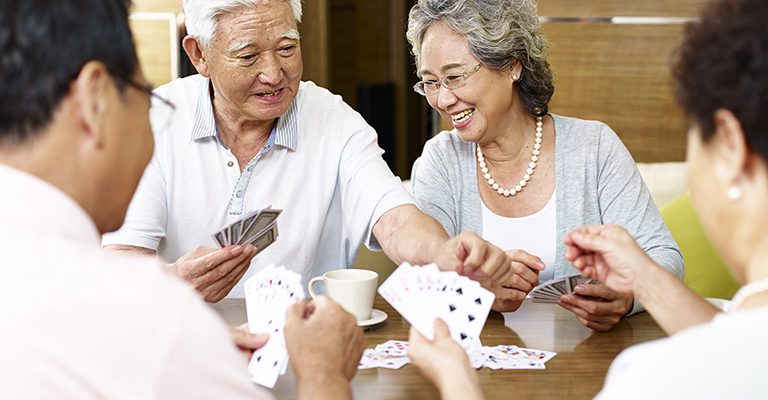
Playing card games offers many benefits for seniors and when played regularly, card games help create meaningful daily moments and social connection.
Card games can support seniors in several important ways:
Card games offer powerful benefits that contribute to an active and connected daily life.
Senior-friendly card games should feel familiar, relaxed, and easy to follow. The focus should always be on enjoyment and connection rather than competition or speed.
When selecting card games for seniors, keep the following points in mind:
Senior-friendly card games are those that invite participation at different levels. Some players may take an active role, while others may prefer to observe or assist.
Card games can be enjoyable and meaningful for seniors with dementia when they are chosen and adapted with care. The goal is not to test memory or skills, but to create a positive experience that encourages participation, familiarity, and connection. Simple rules, repetition, and a relaxed pace are key.
The following card games work especially well for seniors with memory challenges:
1. Go Fish
Players take turns asking others for a specific card rank (e.g. “Do you have any 7s?”). If the other player has the card, they hand it over; if not, the player “goes fishing” by drawing from the deck. The goal is to collect matching pairs or sets.
2. Old Maid
Players form pairs and discard them. On each turn, a player draws a card from the next player’s hand and forms a pair if possible. The player left with the unmatched “Old Maid” card at the end loses.
3. Crazy Eights
Each player is dealt cards and takes turns matching the top card by suit or number. Eights are special and can be played at any time to change the suit. The first player to get rid of all their cards wins.
4. War
The deck is divided evenly. Each player turns over one card at the same time; the higher card wins the round and takes both cards. If cards match, a “war” happens by turning over extra cards.
5. Rummy (Simplified Version)
Players draw and discard cards to form sets (same number) or simple sequences (same suit in order). The first player to form all required sets wins.
6. Matching Pairs (Card Memory Game)
Cards are laid face down. Players turn over two cards at a time, trying to find matching pairs. If a match is found, the player keeps the pair.
When card games are dementia-friendly, they become moments of connection rather than challenges. Even watching, commenting, or helping to turn cards counts as participation. With patience and flexibility, card games can bring comfort, familiarity, and joy to seniors living with memory challenges.
Good preparation and flexibility helps ensure that the experience is enjoyable for all participants, regardless of ability level.
Here are some tips for hosting a card game session for seniors:
Remember patience and warmth. A friendly tone, gentle guidance, and genuine interest help create a positive experience. When seniors feel safe and supported, card games become meaningful moments of connection and shared enjoyment.
Sit-down card games can be a regular part of daily life that supports connection, mental engagement, and joy. When card play becomes familiar and inclusive, it helps create routine, offers gentle cognitive stimulation, and strengthens bonds among participants.
Consider scheduling regular game times, so that everyone knows when to look forward to playing. Keep decks of cards easily accessible and offer a variety of games to suit different interests and energy levels. Encourage group play as well as quiet one-on-one sessions.
Research shows that regular engagement with simple card activities can help maintain cognitive skills and keep the mind active. To learn more about how card play supports attention and focus, check out our article: Can Card Games Improve Focus and Attention in Seniors?
Card games are also a great complement to other daily activities that promote well-being. You can integrate them with reading groups, reminiscence sessions, or seasonal celebrations as part of a varied activity program. For more ideas on engaging activities that support social, cognitive, and physical well-being, visit our page: Assisted Living Activities.
When card games are woven into daily life with flexibility and care, they become treasured moments that brighten the day and enrich social connection. Whether it’s a short round of Go Fish or a gentle game of Matching Pairs, these simple activities bring people together—and make everyday moments more meaningful.