How does music therapy help people with dementia?
Music therapy offers powerful benefits for people living with dementia (PLWD) by reaching parts of the brain that remain responsive even as cognitive abilities decline.

Music therapy offers powerful benefits for people living with dementia (PLWD) by reaching parts of the brain that remain responsive even as cognitive abilities decline.
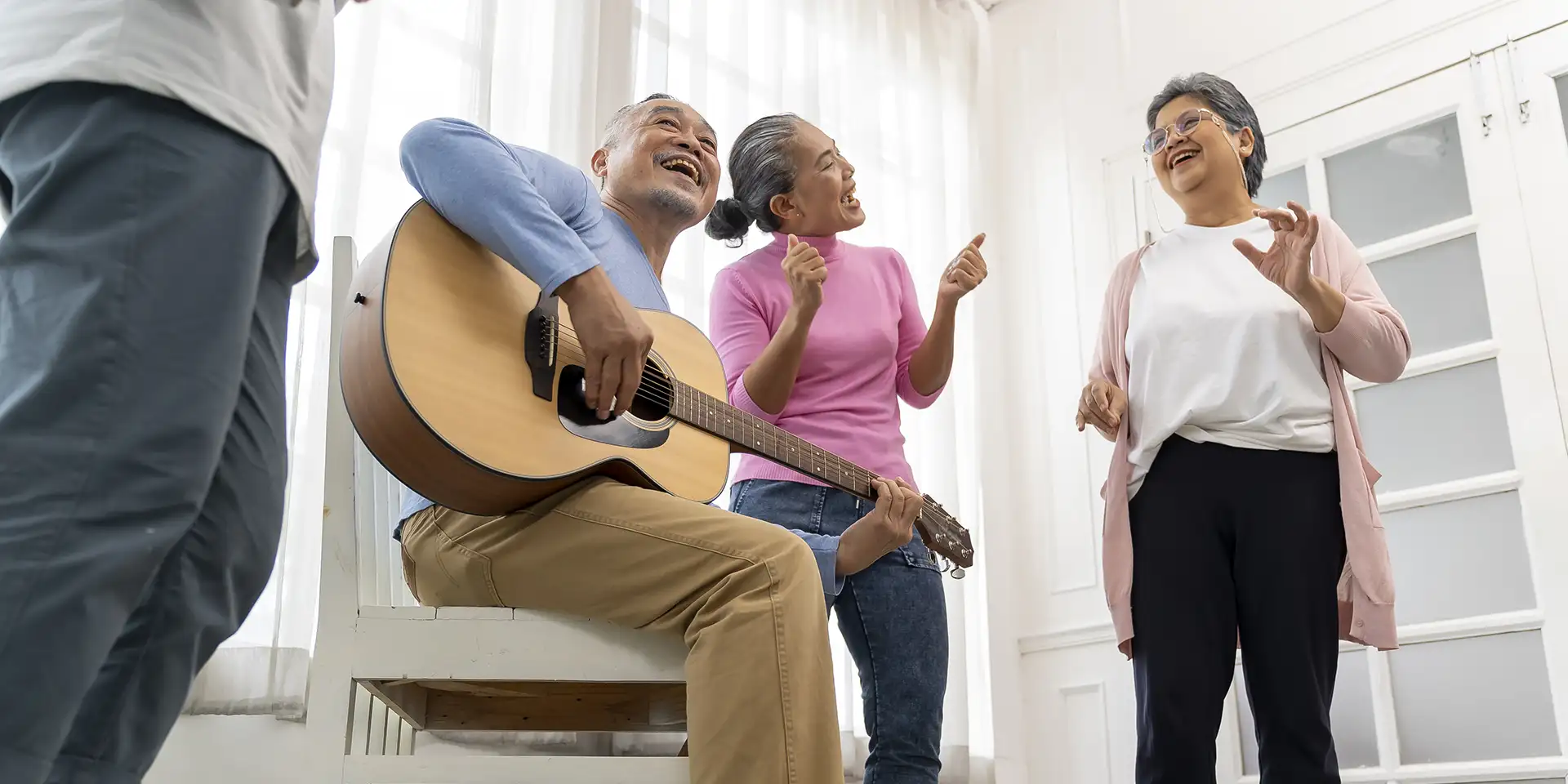

What is the joy of music for seniors? Music holds a unique power; it transcends age and brings joy to people from all walks of
Music has remarkable power to reach people living with dementia in ways that other forms of communication cannot. The most effective music for dementia care
Discover how craft activities provide more than just entertainment for Alzheimer’s patients—they offer cognitive stimulation, emotional expression, and a sense of achievement. This practical guide walks caregivers through selecting appropriate materials for different stages, establishing consistent routines, and implementing five simple projects that create meaningful connections. Learn how to focus on the process rather than perfection while celebrating small victories that preserve dignity.
Discover how the simple act of daily crafting can significantly reduce anxiety and stress in older adults. Research shows that just 45 minutes of creative activity lowers cortisol levels and activates the brain’s natural mood elevators. From meditative knitting to sensory-rich clay modeling, these five therapeutic crafting approaches offer seniors accessible tools for emotional regulation and improved wellbeing, with observable benefits even for those with dementia or cognitive decline.
Discover how aging affects hand-eye coordination and explore enjoyable activities that help elderly people maintain these crucial skills. From knitting and painting to tai chi and tablet games, these hobbies offer more than just coordination practice—they provide cognitive benefits, social connection, and increased independence. Whether you’re looking for arts and crafts, table games, technology options, or gentle sports, these adaptable activities support better quality of life while creating meaningful engagement for seniors at various ability levels.
Regular puzzle-solving may help reduce Alzheimer’s risk by building cognitive reserve and creating new neural connections that protect brain function. Research shows people who engage in mentally stimulating activities like puzzles have lower dementia rates and delayed symptom onset. Discover which puzzle types offer the strongest benefits—from crosswords enhancing verbal memory to jigsaws improving visual-spatial skills—and learn the optimal frequency (4-5 sessions weekly) for maximum cognitive protection. Even in early-stage Alzheimer’s, appropriately tailored puzzles can provide meaningful stimulation and potentially slow progression.
Discover how pottery classes offer seniors a creative way to maintain dexterity through gentle clay manipulation. Research shows these tactile activities strengthen hands and improve joint flexibility while providing cognitive and social benefits. From pinch pots to wheel throwing, various techniques target different aspects of hand function, making pottery an ideal therapeutic activity that seniors actually enjoy practicing consistently. Learn how this art form creates a holistic approach to hand health that translates to improved daily functioning.
Discover how creative activities can transform dementia care by providing cognitive stimulation, emotional wellbeing, and meaningful connection. When verbal communication becomes challenging, crafts offer alternative ways for self-expression and identity reinforcement. This guide explores 5 sensory-rich activities—from scented sachets to memory boxes—that trigger positive memories and spark joy. You’ll learn practical approaches for adapting crafts to different dementia stages and creating successful sessions with the right environment and communication techniques. Beyond scheduled craft times, discover how to integrate creativity into daily care routines, honoring the whole person while creating moments of connection that benefit both those with dementia and their caregivers. Transform ordinary days into special experiences with these thoughtfully selected activities.
Discover how the simple act of knitting can provide cognitive benefits for seniors with Alzheimer’s disease. Research shows that knitting activates multiple brain regions simultaneously, helping maintain procedural memory—which often remains intact longer than other memory types. While not a cure, this rhythmic, bilateral activity creates meaningful engagement that supports neural pathways and may slow cognitive decline. Learn specific techniques for introducing knitting therapy at different stages of memory impairment and how to adapt the activity for maximum therapeutic benefit.